Urban Air
Purifier
Industrial design competition. Air purifiers are grey boxes nobody wants on their street. We turned an 18ft purification core into a landmark people sit under.
1st place, Arklite Design Challenge 2026, and a ₹2 lakh prize
Hide the machine, keep it breathing
INFICON is a city-scale air filtration system: two 10ft shipping containers stacked 18ft high, packed with an electrostatic filter, UV lamps, a PCO screen, fans and IoT controls. The machine worked. What it lacked was a face. Arklite Speciality Lamps asked MIT-WPU's design students for an exterior that hides the metal box without blocking a single inlet, survives years of dust and weather, and feels at home in India, South America or Europe.
As Team Vayu we answered with two directions, one civic and engineered, one natural and symbolic, and the proposal took first place with both.
- Client
- Arklite Speciality Lamps, with Filtron Tec
- Team
- Team Vayu: V. Varnika, Mrunal Bhosale, Archana Singh, Pranshu Jena
- Brief
- Four-week industry design challenge, MIT-WPU School of Design
- My role
- Main idea, ideation, concept development, material study
- Result
- 1st place and ₹2 lakh, for both concepts
Where I steered
The main idea
The starting thought: a purifier people approach, sit under and recognise, not a box they walk past.
Ideation
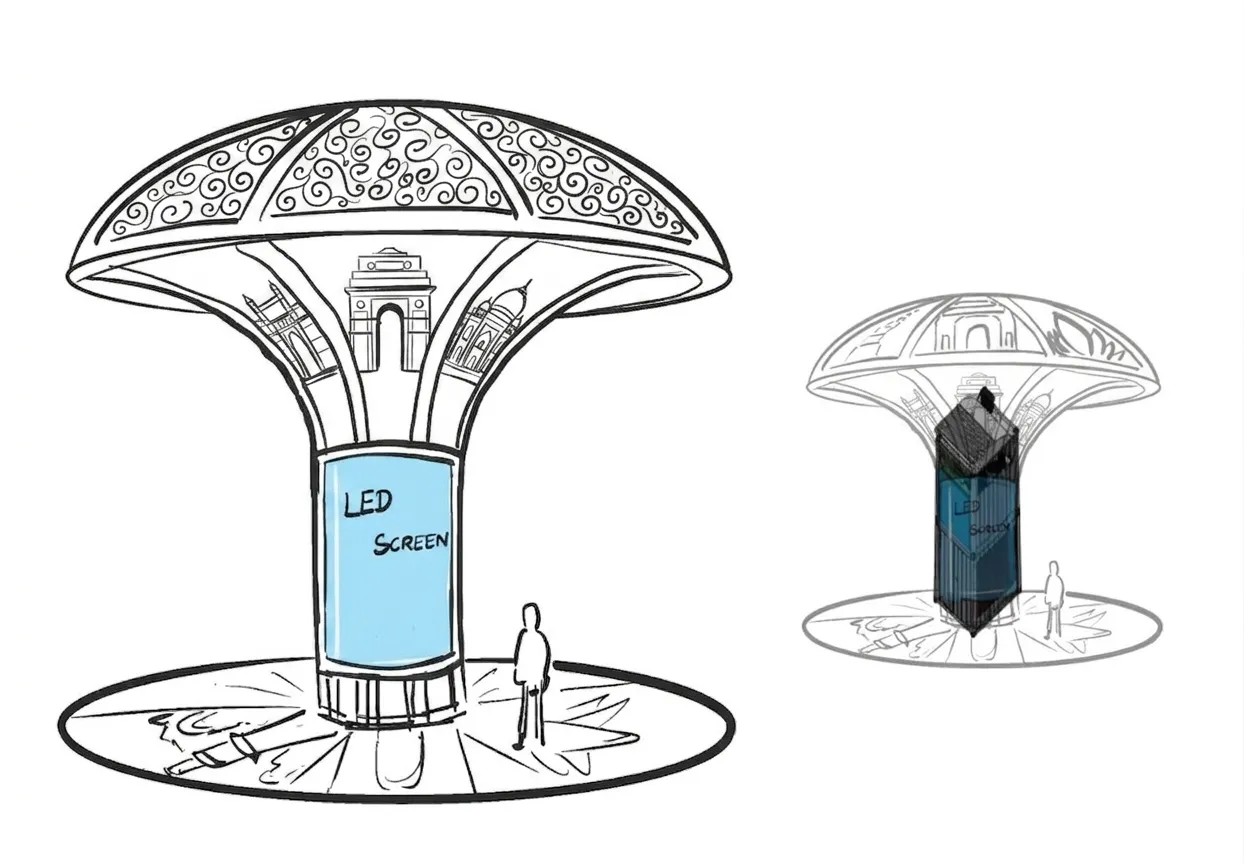
The early sketches behind both forms: the canopied pillar and the blooming lotus.
Concept development
Turning the pillar and the lotus into full concepts: how air moves through them, how they sit in a street, how they change by city.
Material study
Choosing what they are made of: recyclable perforated aluminium, a powder-coated steel frame, flat-sheet parts that are cheap to replace.
Aeropillar
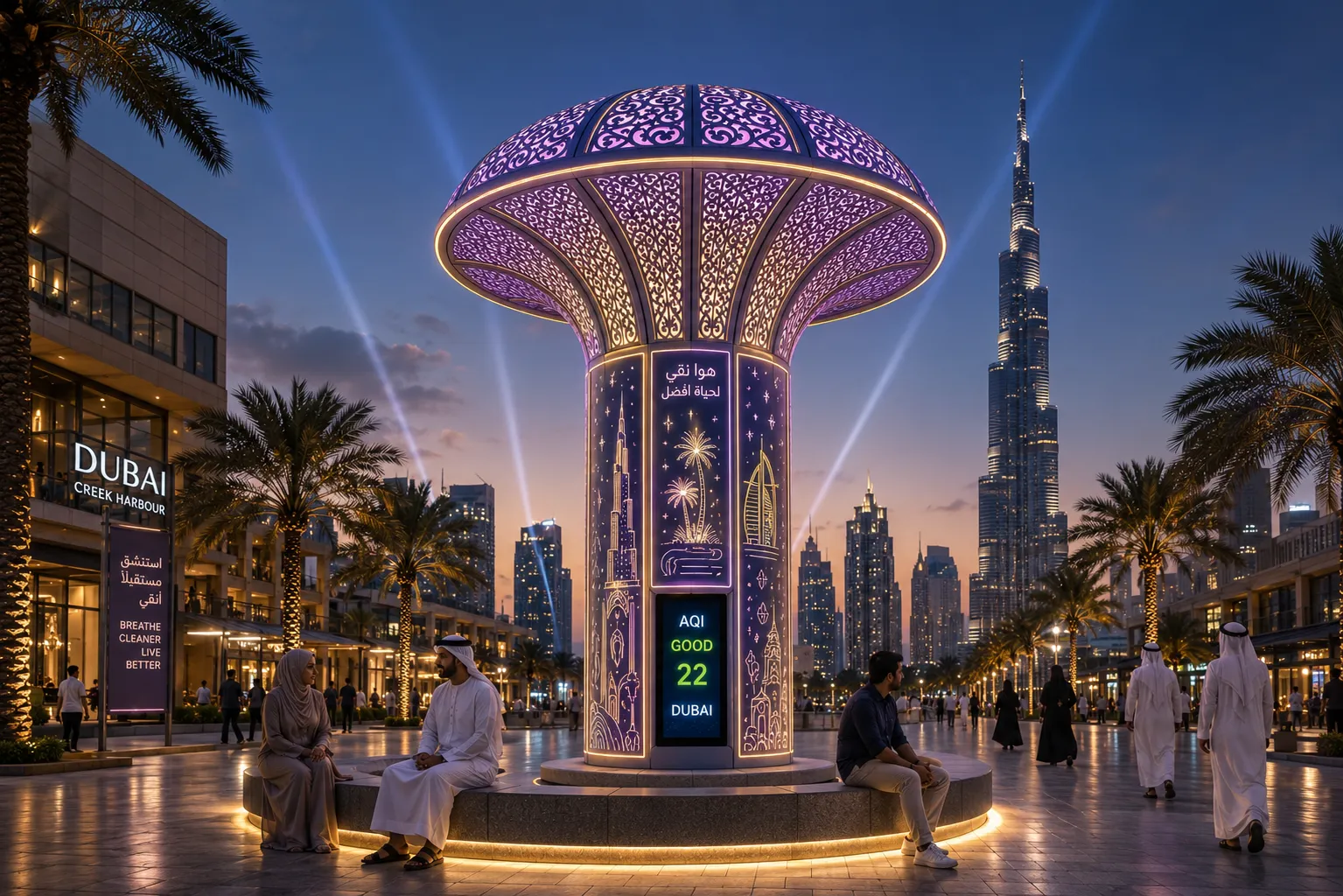
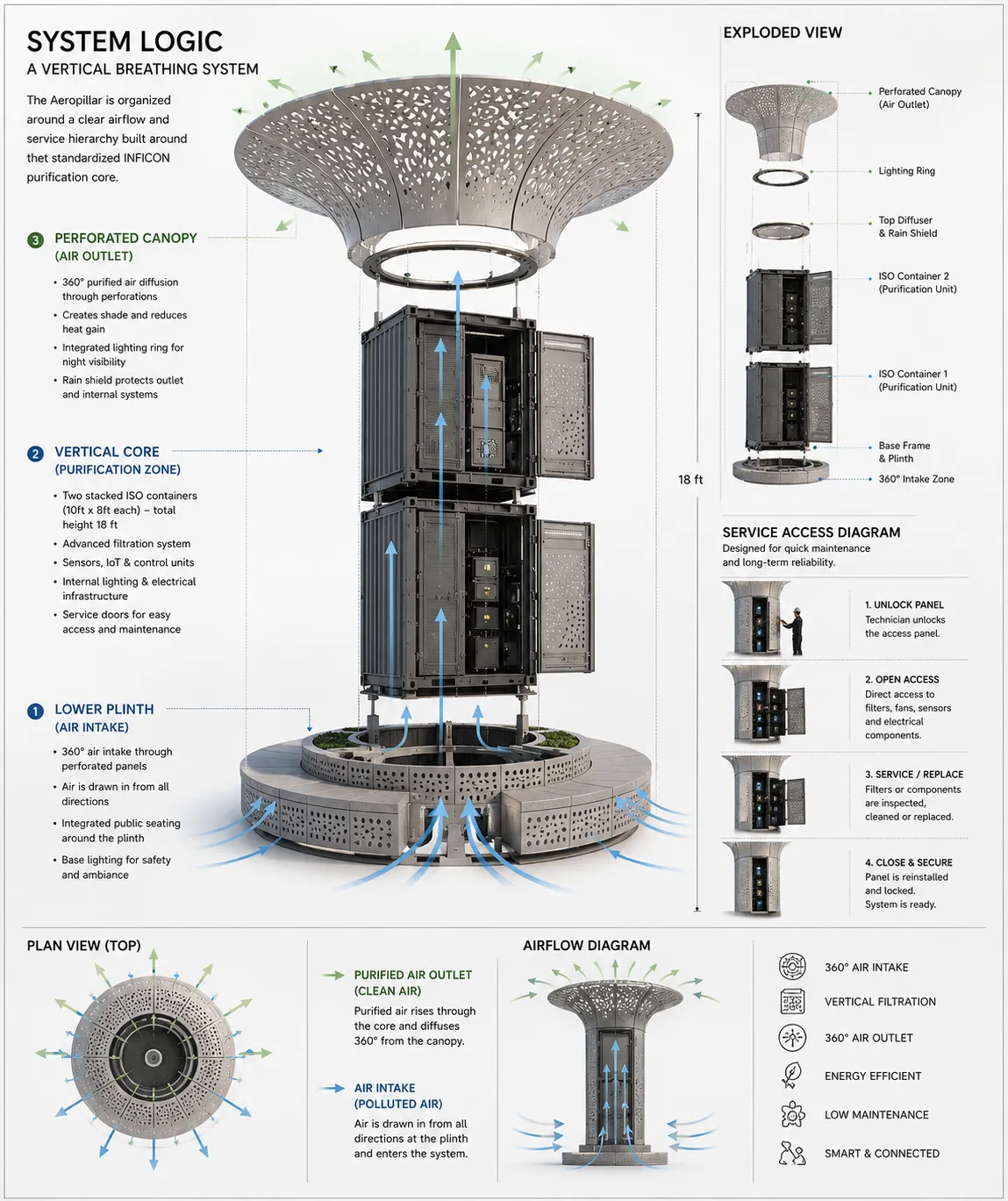
The purifier as a piece of street furniture you can walk up to. Air is drawn in all round a seated plinth, cleaned in the stacked container core, and let out through a perforated canopy that also throws shade.
- Plinth. A 360° air intake built into public seating.
- Core. The two containers: filters, sensors, lighting and service access.
- Canopy. Clean air out, shade below, a silhouette you can spot from the road.
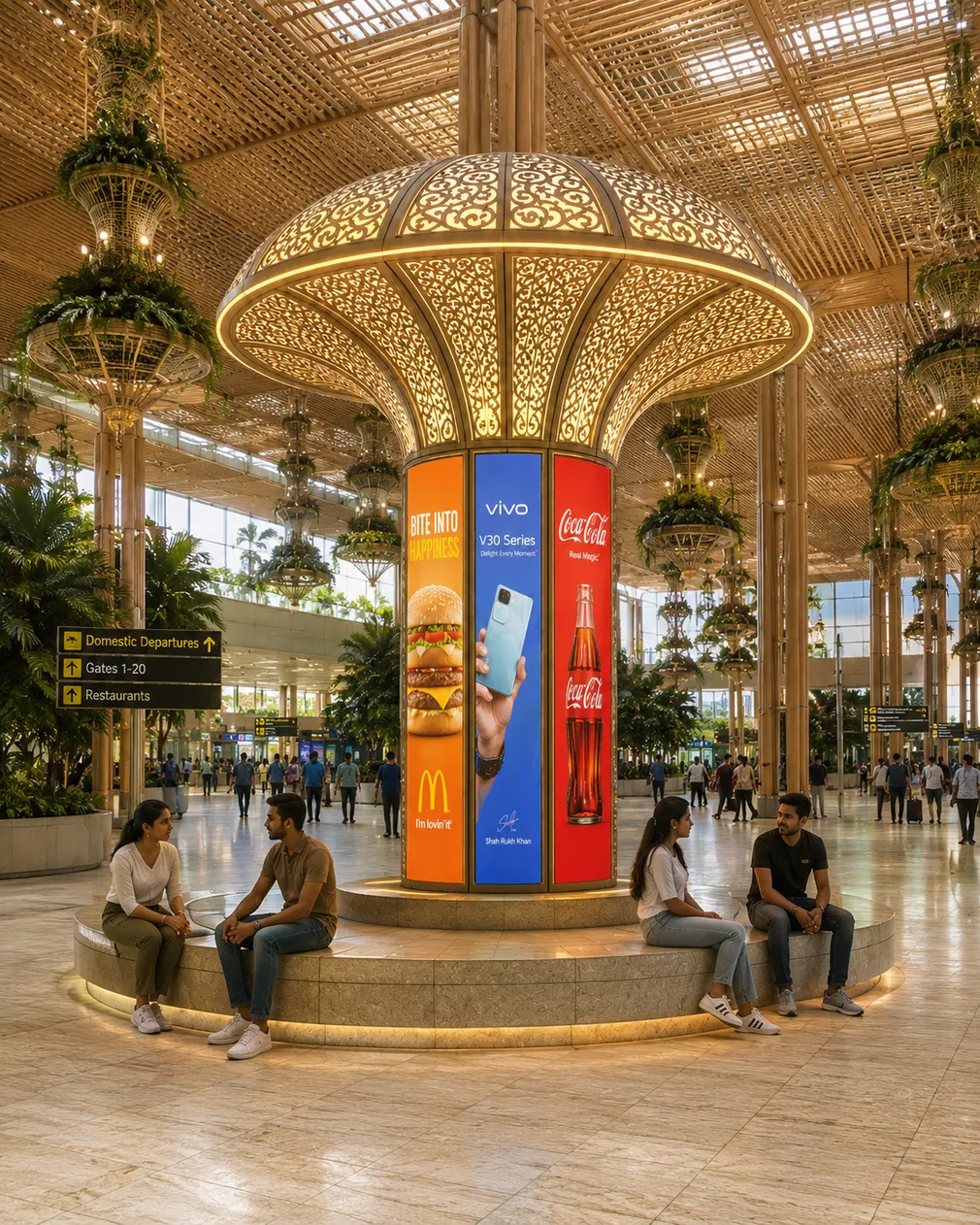
One structure, many cities
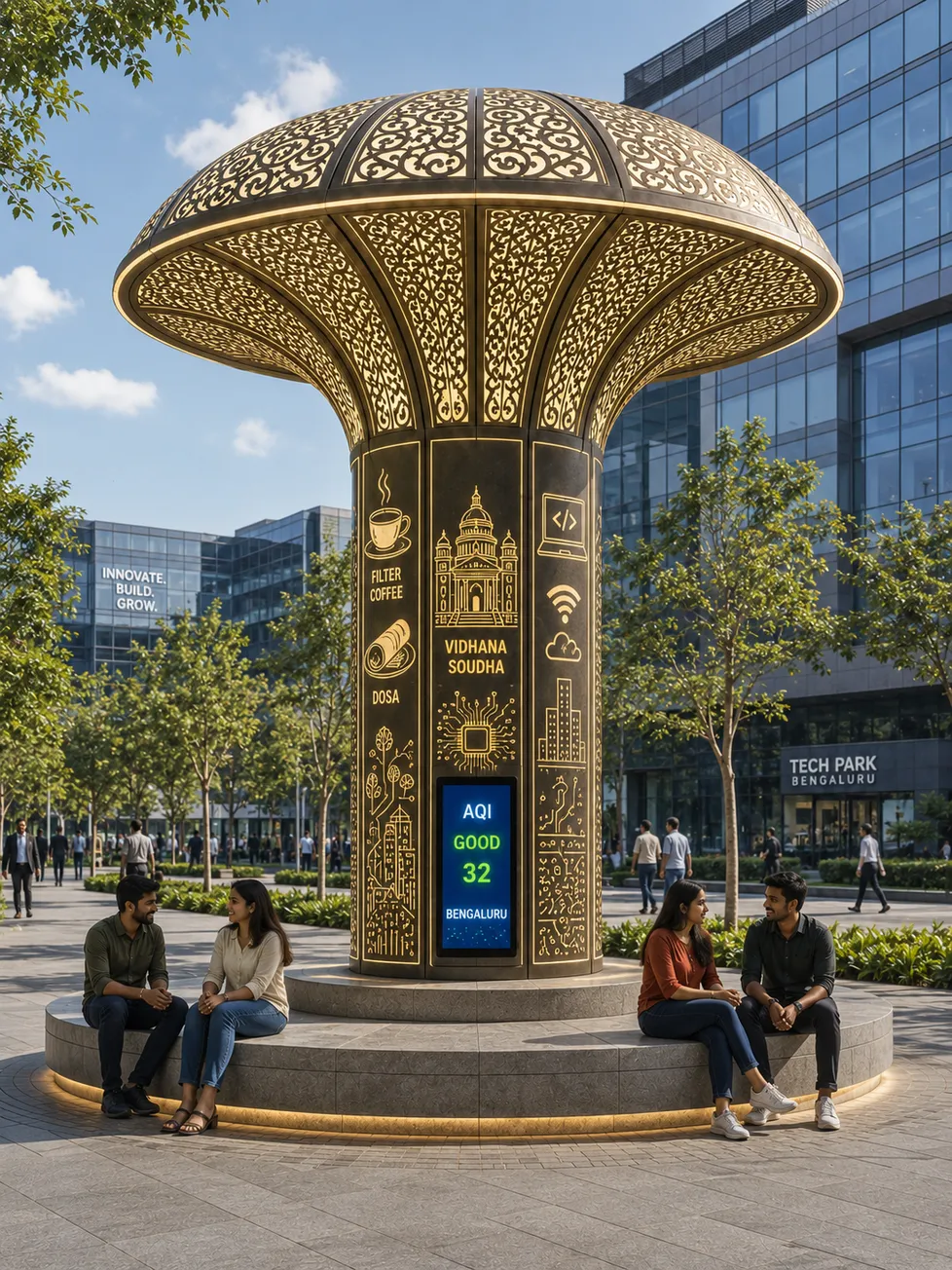
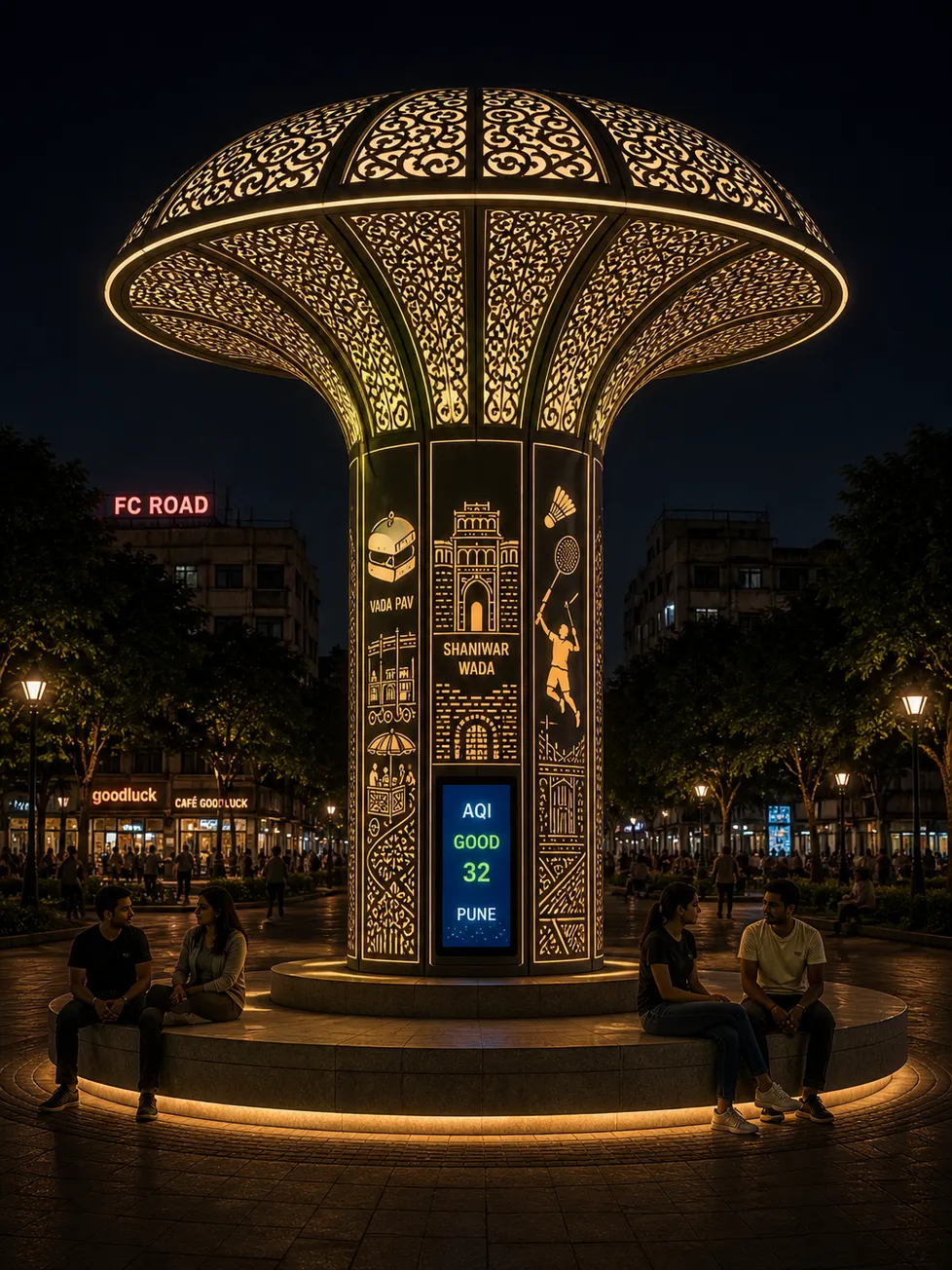
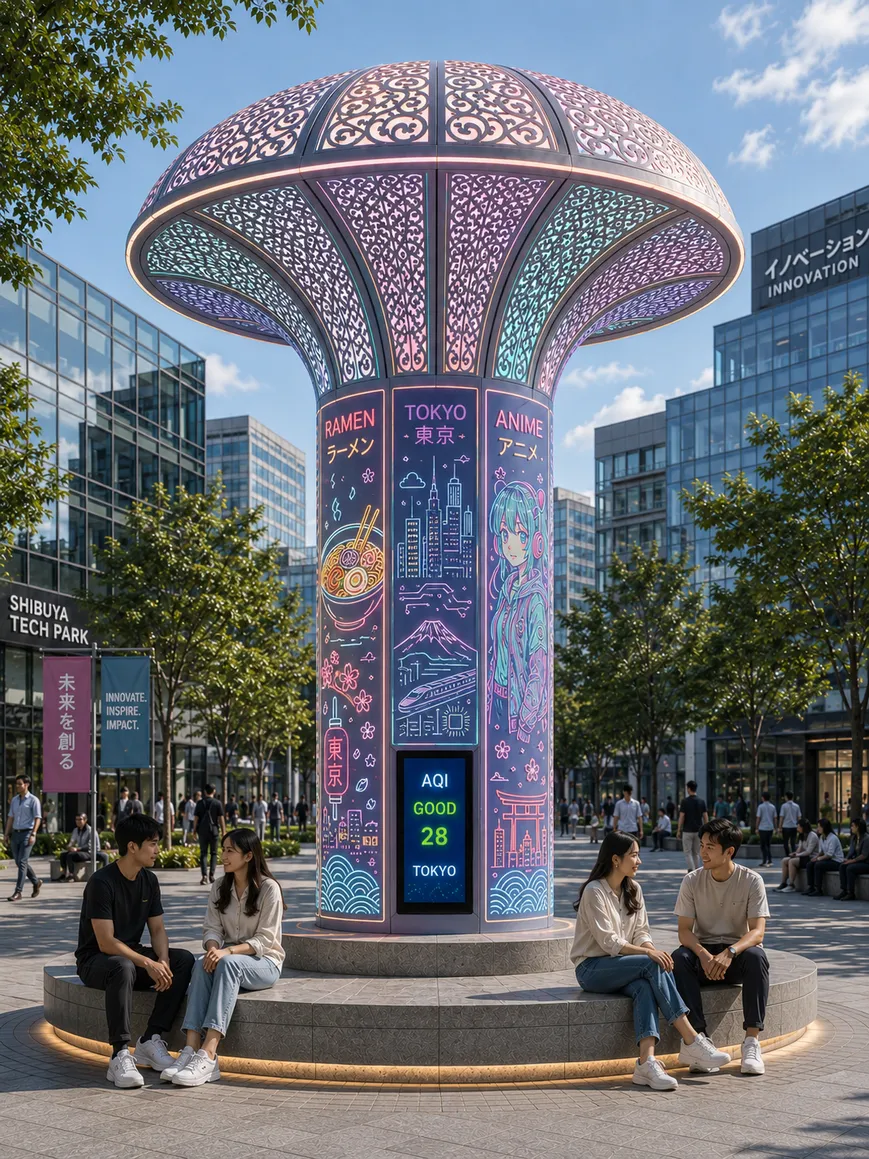
The frame never changes. Each city gets its own skin of graphics, light and screen content, so localising costs a print run, not a redesign. The core can carry advertising too, which helps pay for it.
- Pune
- Heritage, sport, street culture
- Bengaluru
- Governance, technology, café culture
- Tokyo
- Anime, ramen, futuristic pop
- Dubai
- Arabic geometry, luxury, night spectacle
Serviced in four moves
The outer panels are the doors. A technician reaches filters, fans, sensors and wiring without touching the structure, which keeps repair time short.
- 1Unlock the panel
- 2Open the core
- 3Service or replace
- 4Close and secure
Facade in recyclable 3003-H14 aluminium with city-motif perforations, a structural steel mast, HEPA-13 and carbon filter trays, and a UV-stable powder coat.
Blooming Air
If purifying air is natural, the form can be too. The lotus grows out of dirty water and stays clean, which is exactly what the machine does for air. It is also India's national flower, so nobody needs it explained.
Its four petals are four storytelling surfaces. In Delhi they would carry the Qutub Minar, the Lotus Temple and the city's street food, laser-cut into the metal.
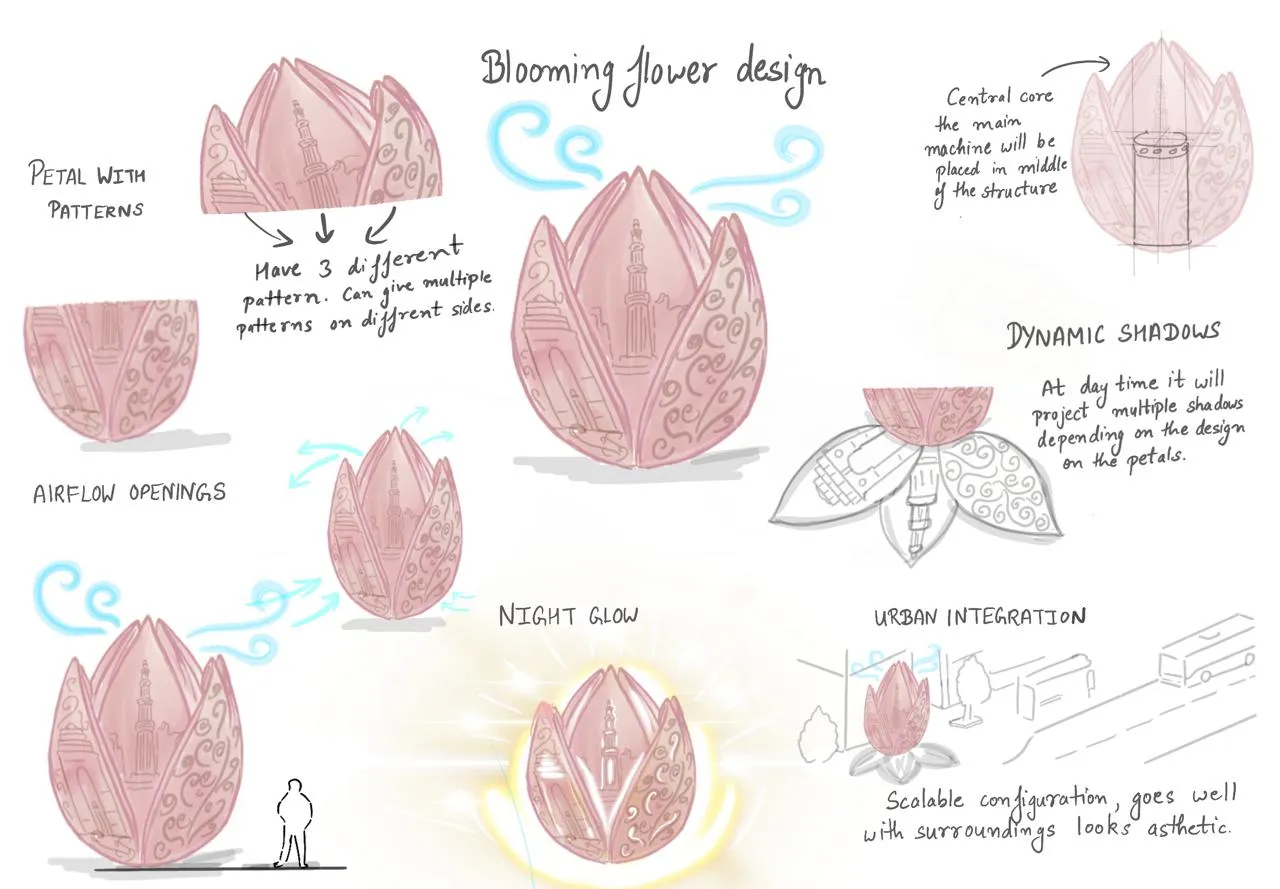
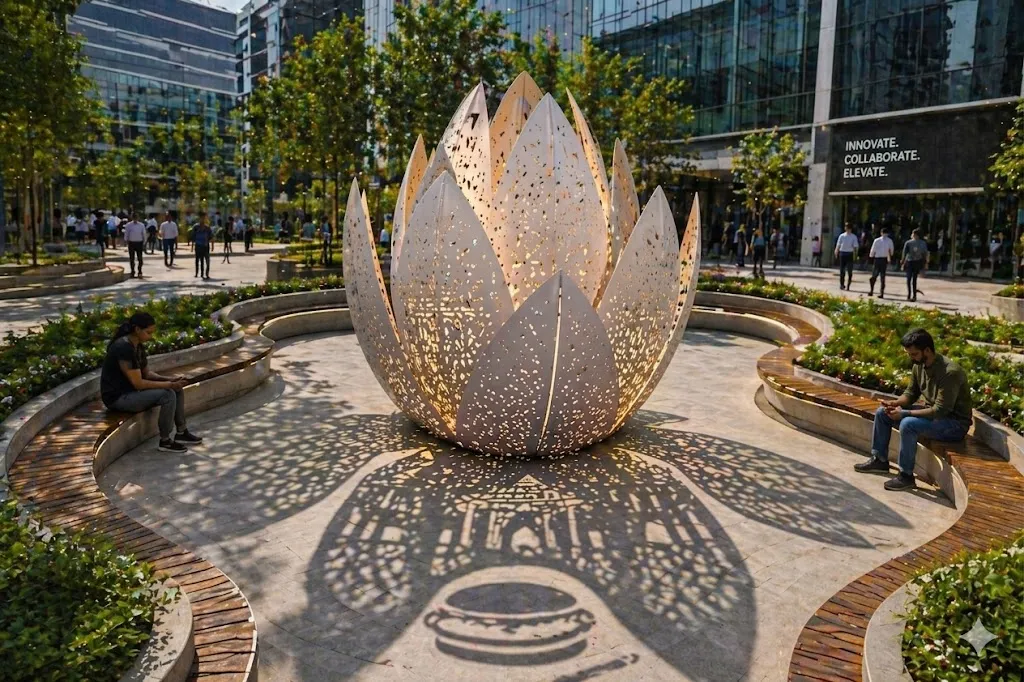
By day sunlight through the cut patterns draws the city on the ground, and the curved benches become a shaded place to breathe.
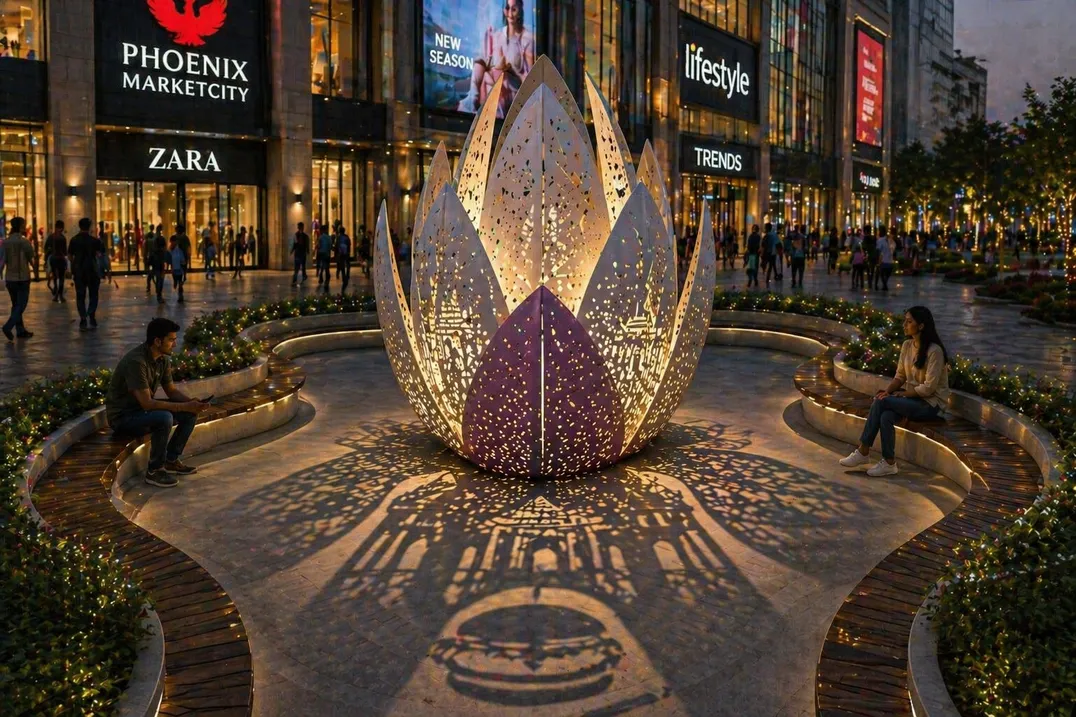
By night it glows pastel pink while the air is clean and pulses white when pollution rises, so anyone can read the air quality from across the street.
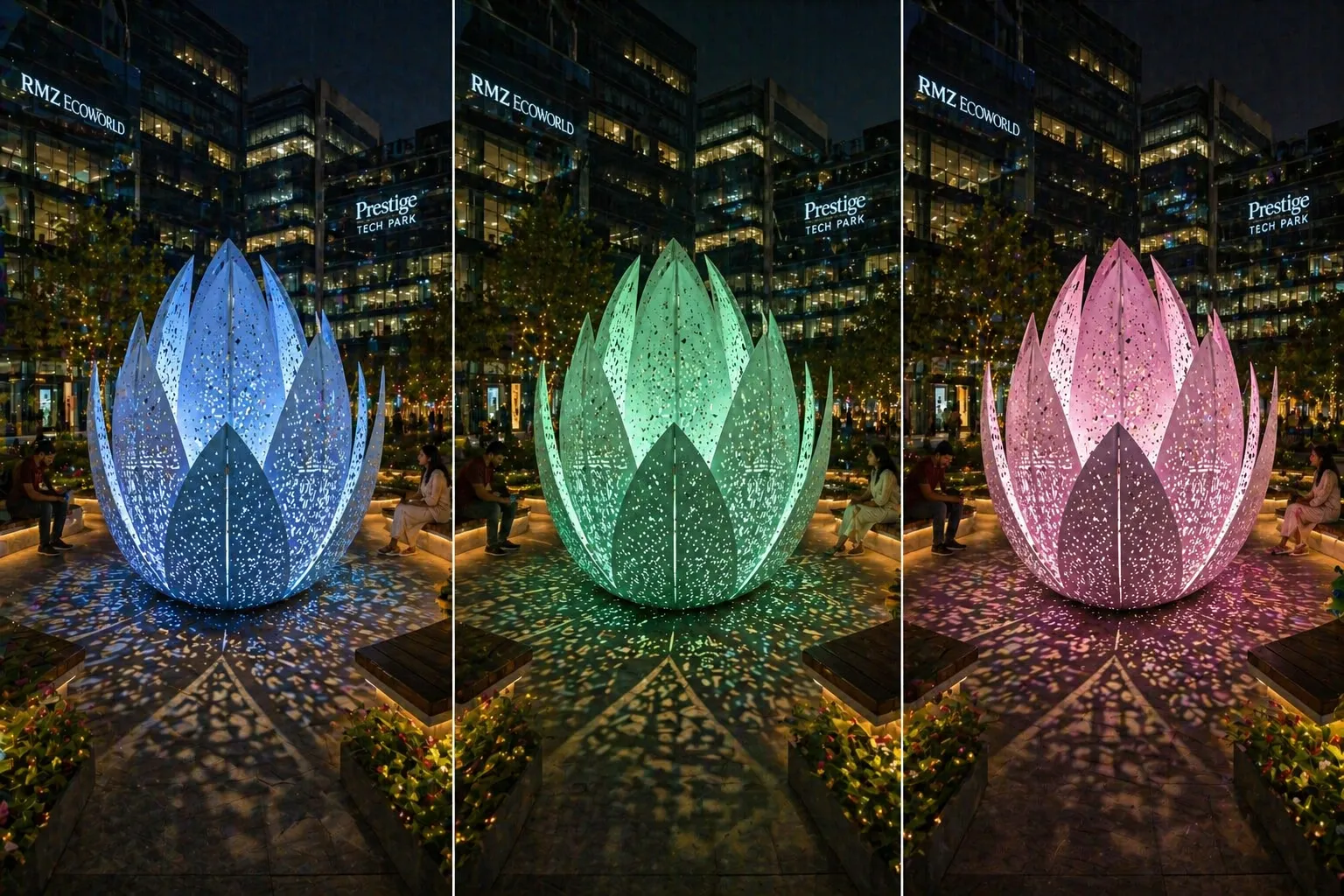
Bloom only where it pays
Not every street needs a landmark. The same core ships in three levels, so a city spends on the skin only where people will see it.
The Core
The purifier body alone.
Industrial areas, hidden alleys
The Lotus
Adds the petal skin, seating and city art.
Parks and neighbourhoods
The Smart Lotus
Adds screens, light shows and colour change.
Malls, IT parks, tourist spots
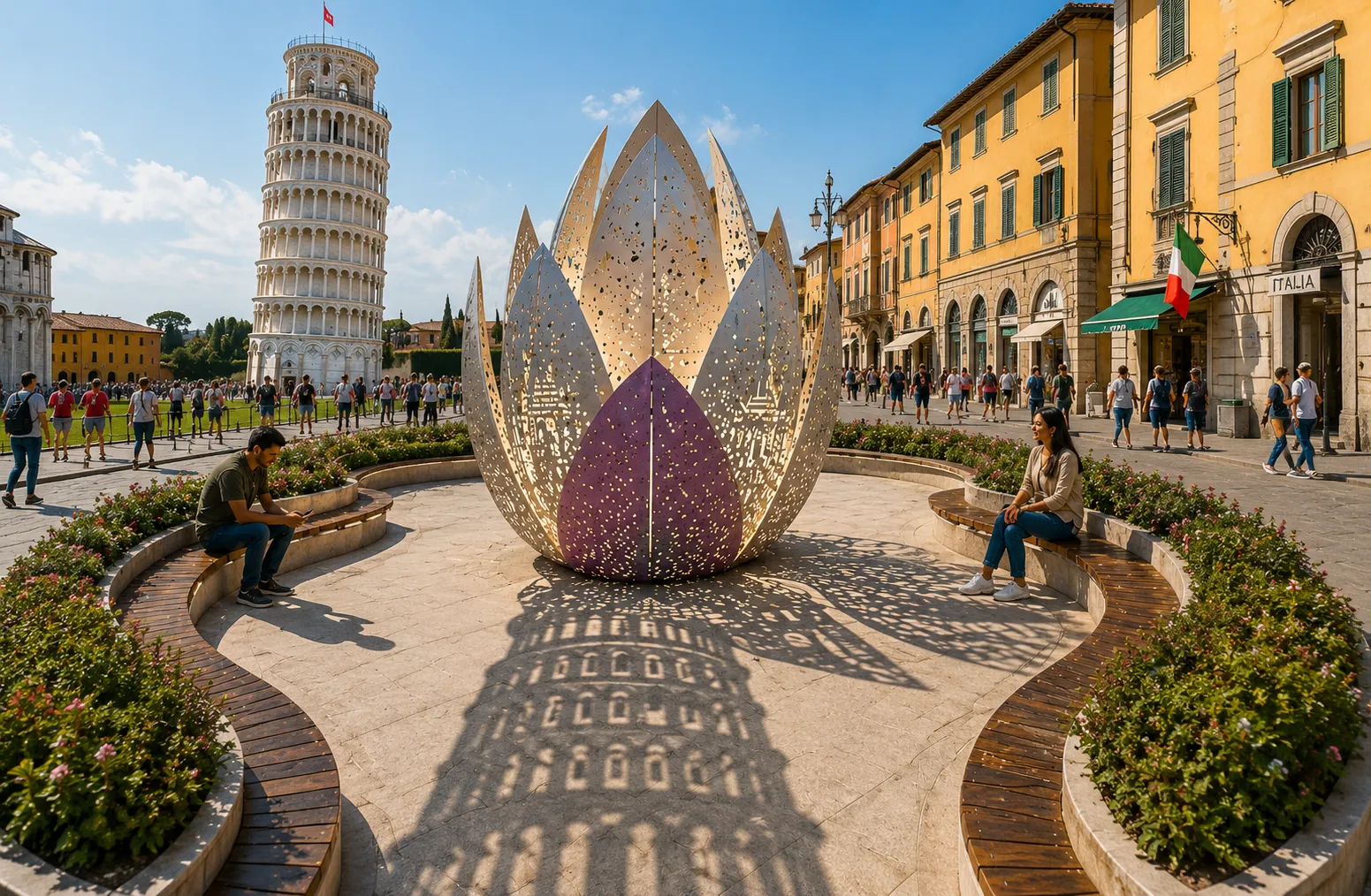
Abroad, the flower changes with the country's own flora while the system stays the same.
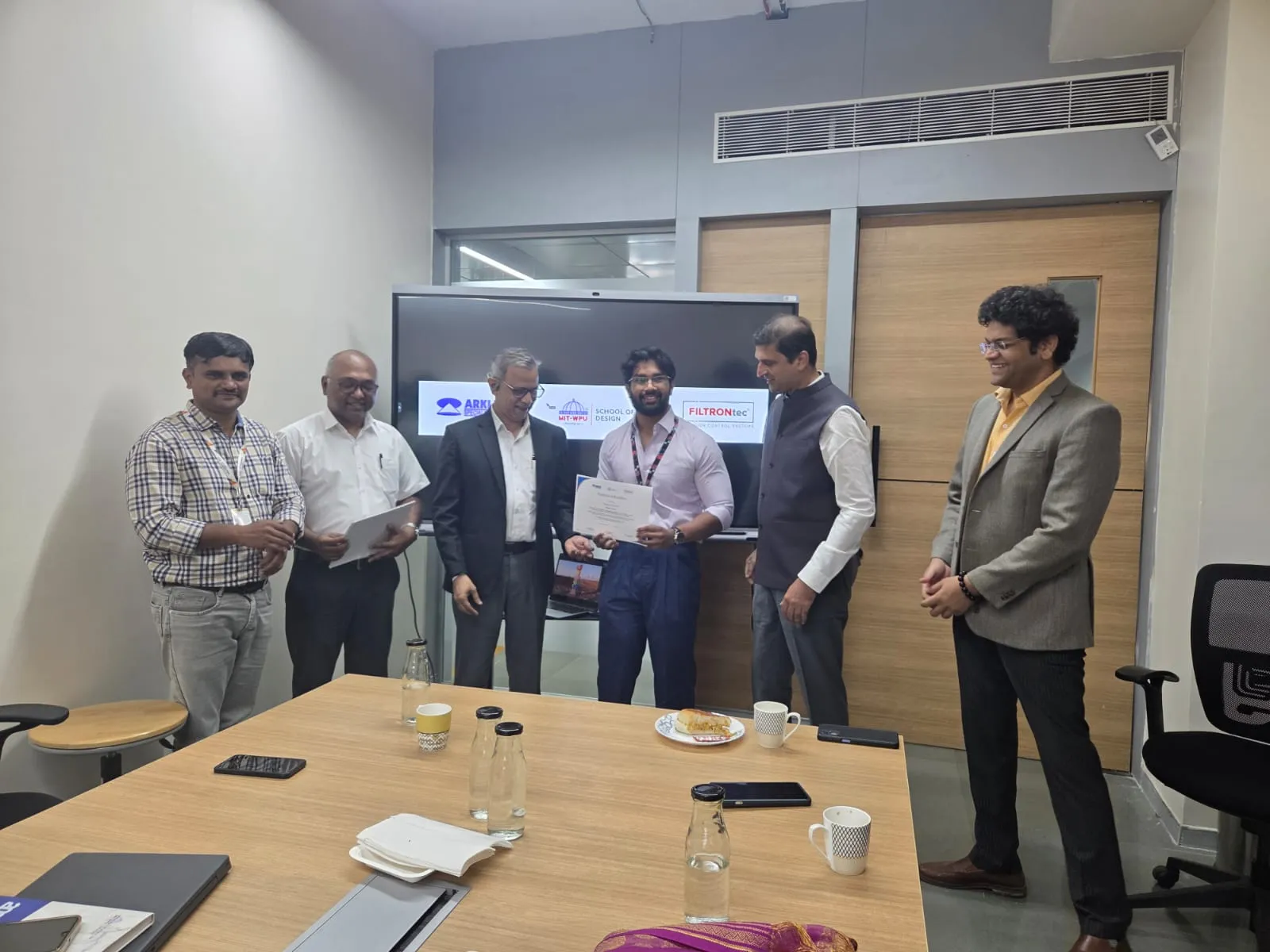
First place
Both concepts went to the jury together and took first place. The jury praised the balance of impact and practicality: how the air moves, how a technician gets in, whether it can be built, how it looks by day and by night, and how people use it.
₹2 lakh, presented 10 June 2026, Pune
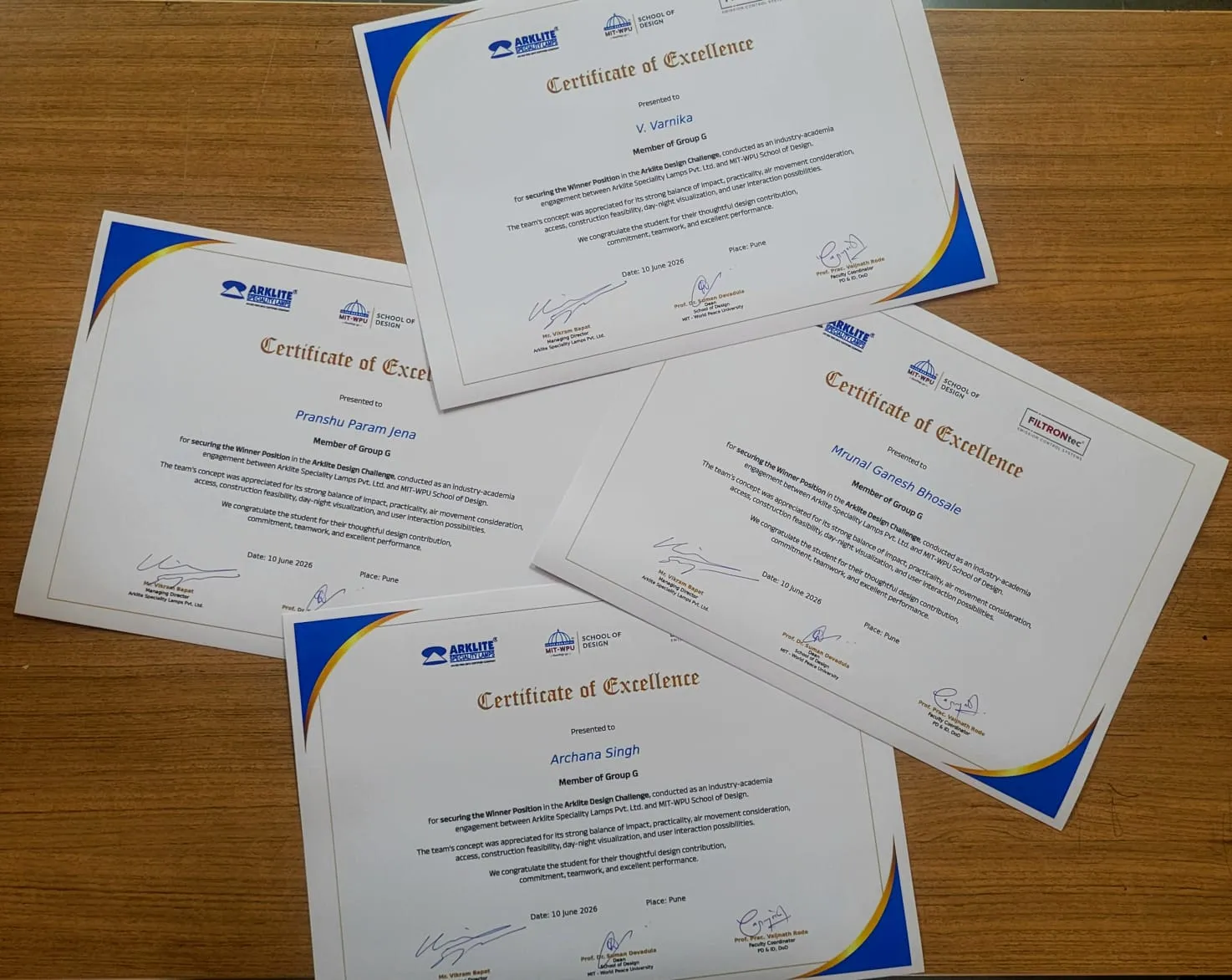
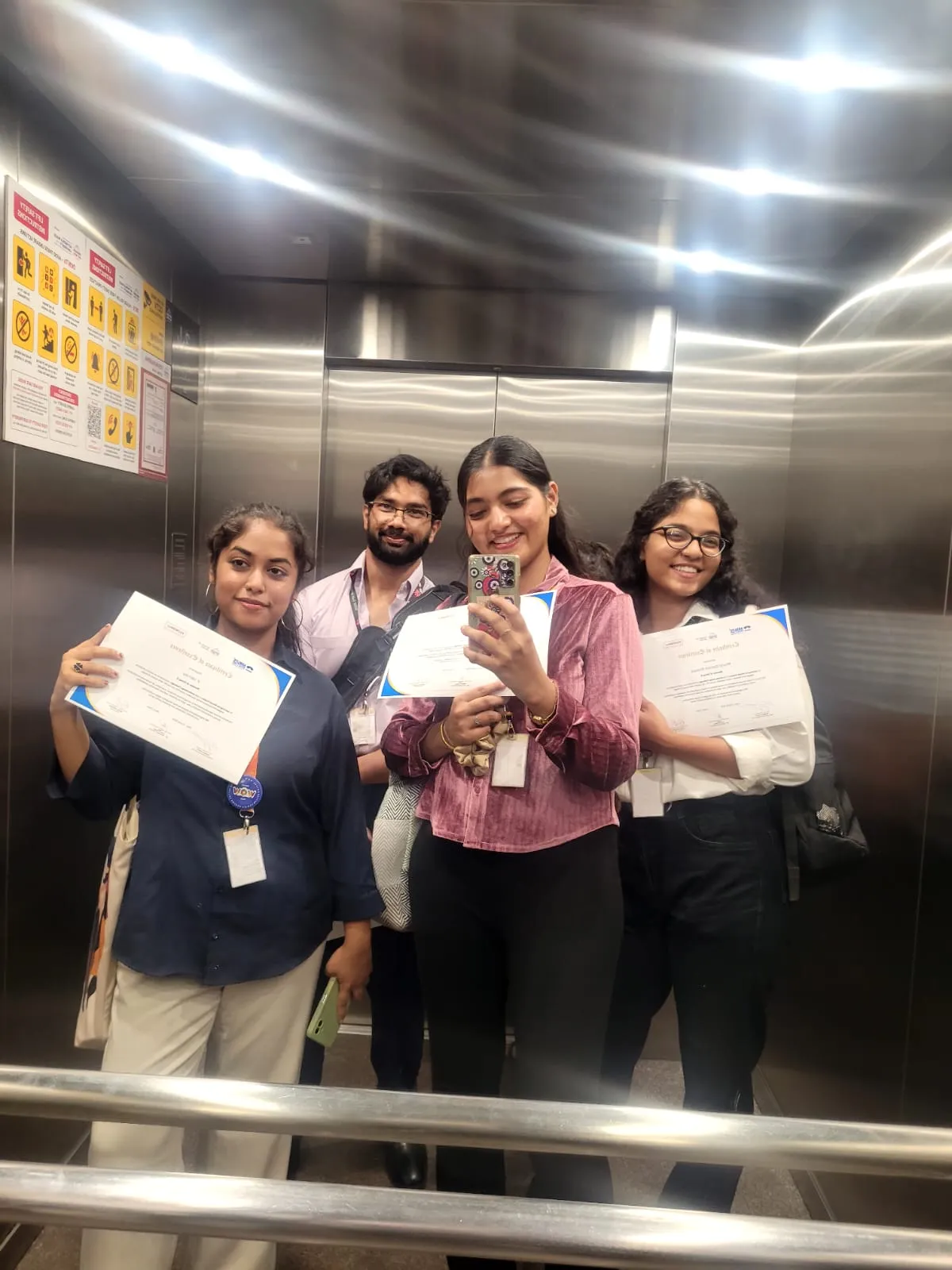
Thank you to Mr. Vikram Bapat of Arklite for the brief, Mr. Vaijnath Rode for his design feedback as competition coordinator, Mr. Ganesh Jadhav and Ms. Shweta Gade for their support, and our Dean, Dr. Suman Devadula.